<< Go Back up to Region ‘United Kingdom: outside London’
| Follow Mike Hume’s Historic Theatre Photography: | |
|
Architect: John P. Briggs
First Opened: 20th January 1902 (124 years ago)
Closed: 23rd June 1956
Reopened as a sports centre: June 1958
Reopened as a theatre: 26th September 1989
Former Names: Grand Opera House and Empire, Empire Theatre, SS Empire
Website: grandoperahouseyork.co.uk 
Telephone: 02890 241919
Address: Clifford and Cumberland St, York, YO1 9SW
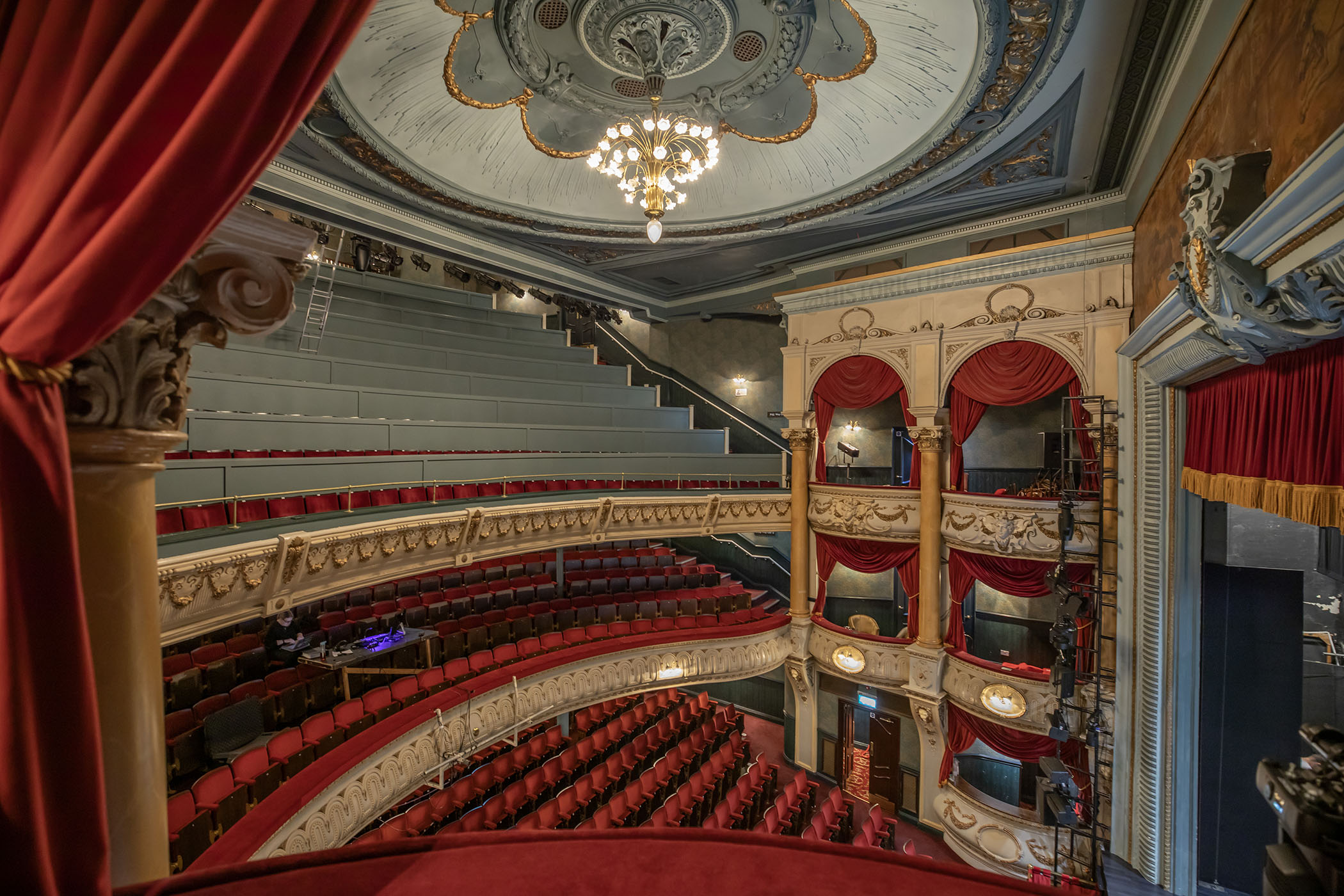
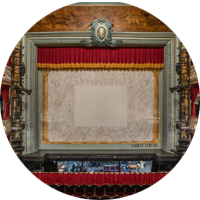
The Grand Opera House in York opened in 1902, built by local businessman William Peacock by having an old corn exchange and an adjacent warehouse adapted into a theatre building. The theatre was used for roller skating, dancing, and wrestling for the latter part of the twentieth century before being returned to live theatre use in the late 1980s.

 Detailed Information
The site the theatre stands upon started off as a corn exchange and the warehouse behind it, which were unified into a single theatre building – a music hall – by Lancashire-based architect John P. Briggs, who had previously worked for renowned UK theatre architect Frank Matcham. Pieces of both buildings survive in the current theatre, and one wall of the warehouse is clearly visible as the side wall of the stagehouse on Cumberland Street.
The theatre opened with a performance of “Little Red Riding Hood” starring Australian music hall entertainer Miss Florrie Ford.
In the summer of 1903 the theatre closed for a week to undergo a thorough spring cleaning. Following the “dusting-up and re-decoration” the theatre reopened on Monday 6th July 1903 with a production of the popular domestic melodrama “A Noble Brother”. More importantly, the theatre was renamed the Grand Opera House and Empire seemingly so that smoking would still be allowed in the theatre – something that was not allowed in serious theatres of the time.
In early 1909 the theatre was entirely redecorated, the auditorium enlarged (no specific details are available), and a new heating system installed. By this time the theatre was exclusively known as the Empire Theatre.
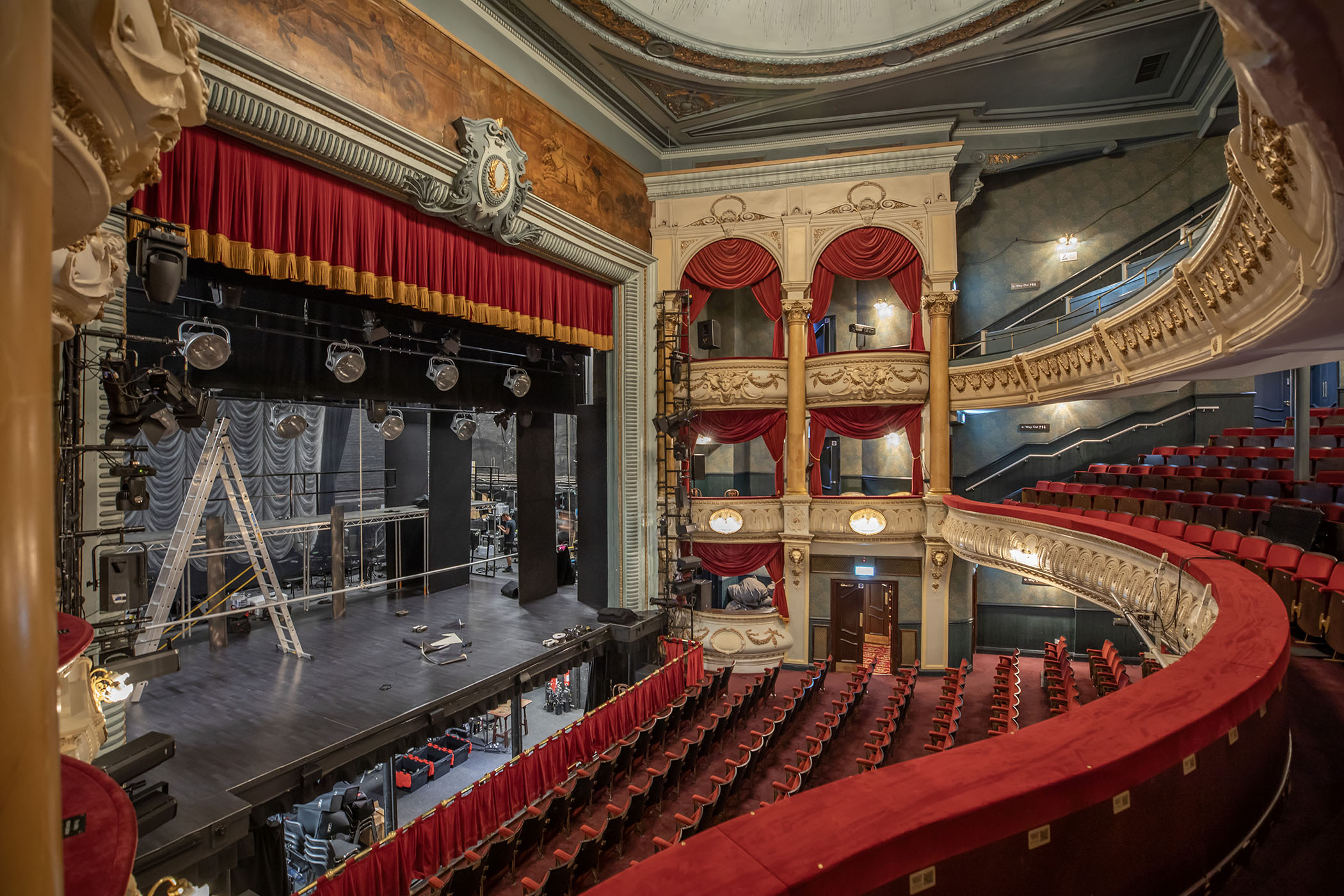
Above the proscenium arch is a large mural depicting the chariot race from the novel “Ben-Hur: A Tale of the Christ” by Lewis Wallace. The mural may have in part been inspired by Alfredo Tominz’s 1890 painting “The chariot race in the Circus Maximus”.
Stars appearing on the stage included Charlie Chaplin, Gracie Fields, Lillie Langtry, Marie Lloyd, Vera Lynn, Laurel and Hardy (on their last tour), and Morecambe and Wise.
The Peacock family, who had purchased the buildings and created the theatre in 1902, ran it until 1945 with a variety of productions including pantomime, opera, plays, and also some silent films.
Large rates increase in 1945 ruined the theatre, forcing Marie Blanche, William Peacock’s daughter, to end the years of family ownership by selling it to Frederick J. Butterworth of FJB Theatres.
The theatre closed in late September 1956 due to dwindling audiences in the wake of the rise of television. In June 1958 it was reopened as a sports centre called the SS Empire by new owner Ernest Shepherd, SS being an abbreviation for “Shepherd of the Shambles”. The main floor seating and stage were replaced with a huge level floor to accommodate roller skating, dancing, bingo, and wrestling.
Closing in the latter part of 1985, the theatre was put up for sale at auction in December 1985 but did not attract any bidders. It then lay dormant for nearly two years until it was acquired in 1987 by new owners the India Pro Company, based in Oxfordshire.
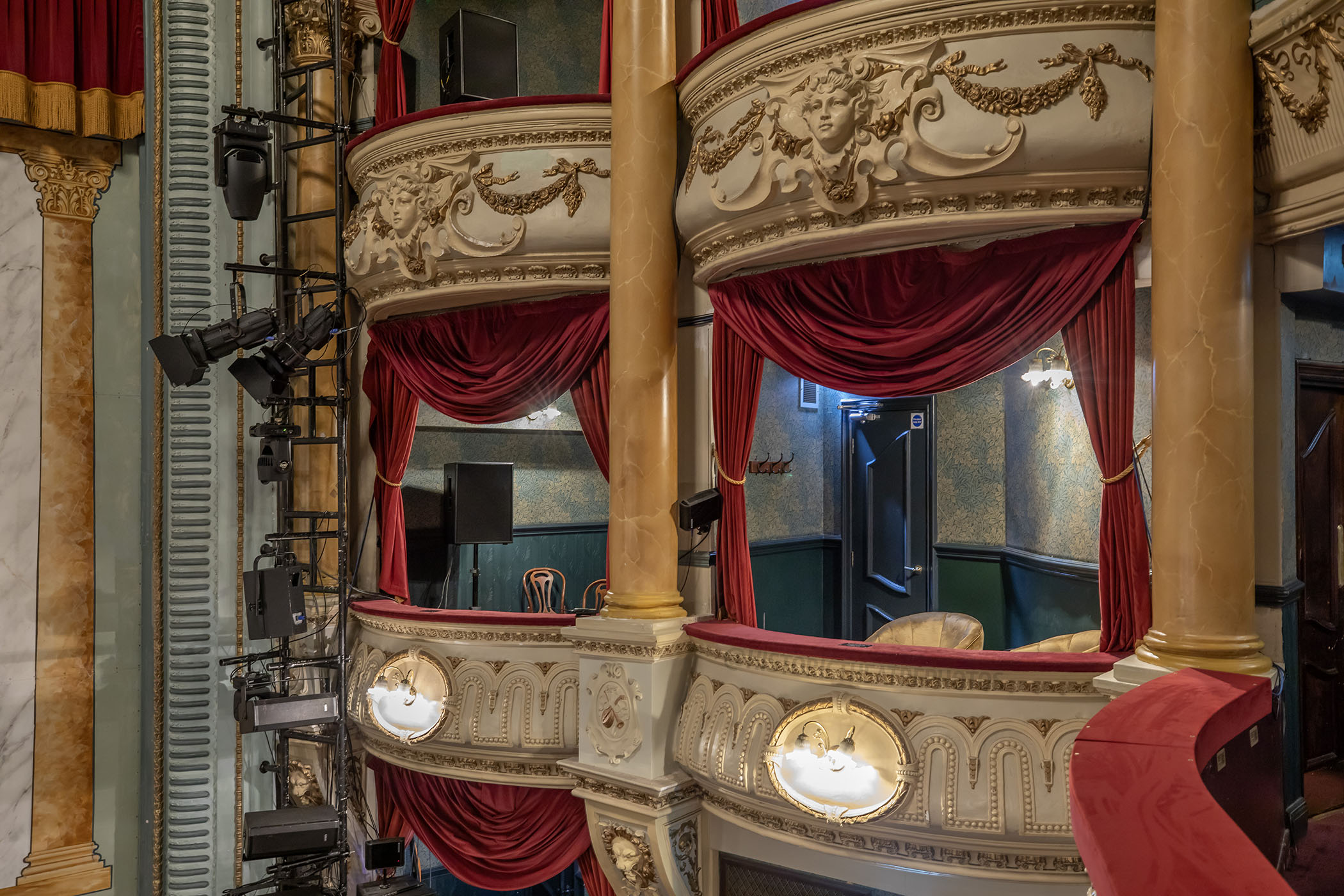
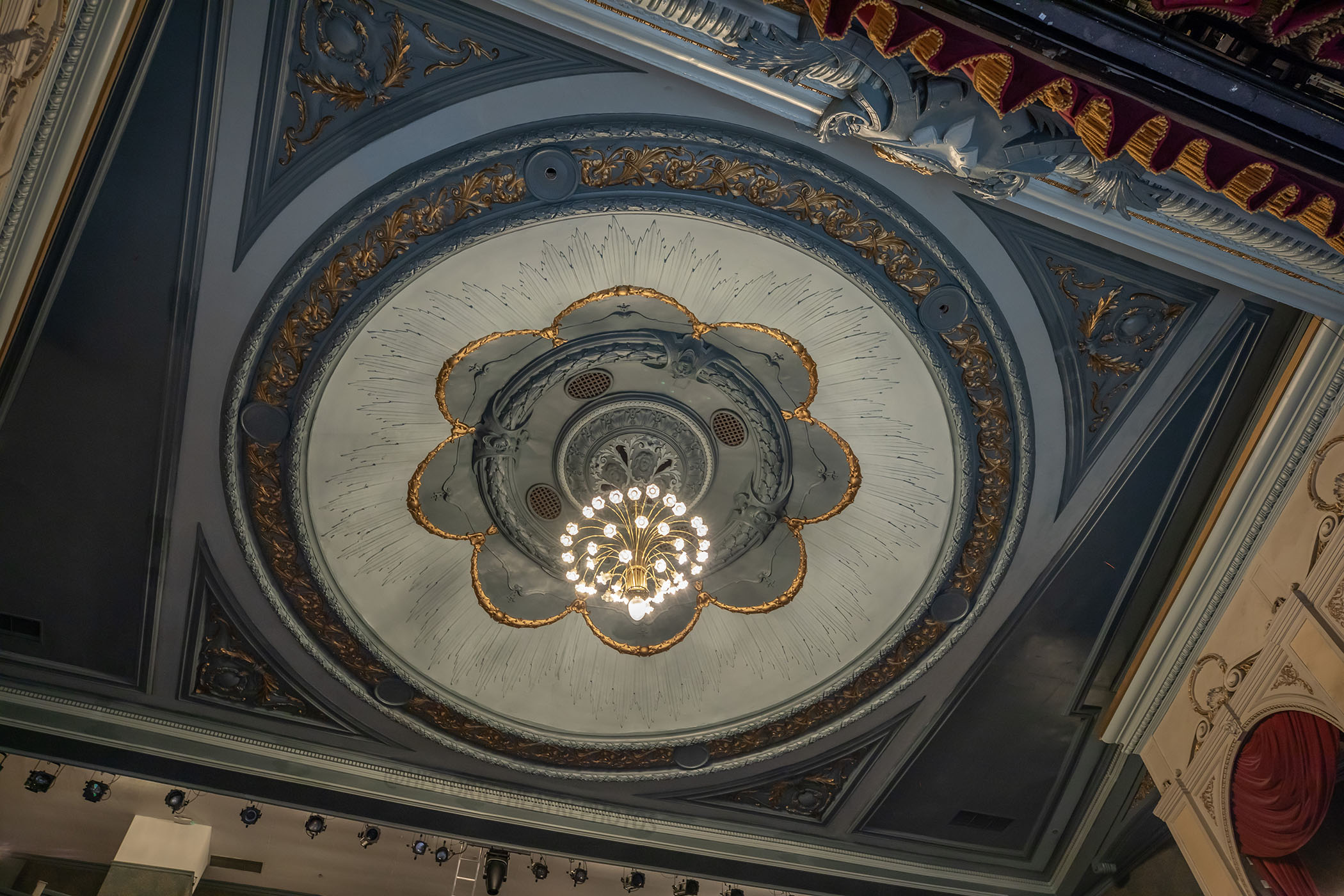
The India Pro Company contracted architect Gordon J. Claridge to restore the theatre to its 1909 glory. Scraps of original wallpaper were copied, new carpets were created from original patterns, Stalls boxes were restored, and a new stage built. The renovation back to a live theatre venue cost £4 million.
The theatre reopened it in late September 1989 with Christopher Newell as artistic director and a production of “Macbeth” onstage, 33 years since it last staged a theatre performance.
The theatre closed again 1991 and was subsequently acquired in 1992 by E&B Productions, reopening on 26th February 1993.
In 1995 the theatre was sold to Apollo Leisure, ultimately resulting in the building coming under the ownership of Ambassador Theatre Group in 2009 (rebranded in April 2024 as ATG Entertainment ). They continue to manage and operate the theatre to this day.
 Listed/Landmark Building Status (28th February 1986)
 How do I visit the Grand Opera House?
Tours are offered on an irregular basis by ATG Entertainment. Check the theatre’s Tours page for further information.
Photos of the Grand Opera HousePhotographs copyright © 2002-2026 Mike Hume / Historic Theatre Photos unless otherwise noted.
Text copyright © 2017-2026 Mike Hume / Historic Theatre Photos.
For photograph licensing and/or re-use contact us here . See our Sharing Guidelines here .
| Follow Mike Hume’s Historic Theatre Photography: | |
|